HomeYard drainage
Service · Standing water and soggy lawns
Yard drainage for standing water and soggy lawns south of Portland
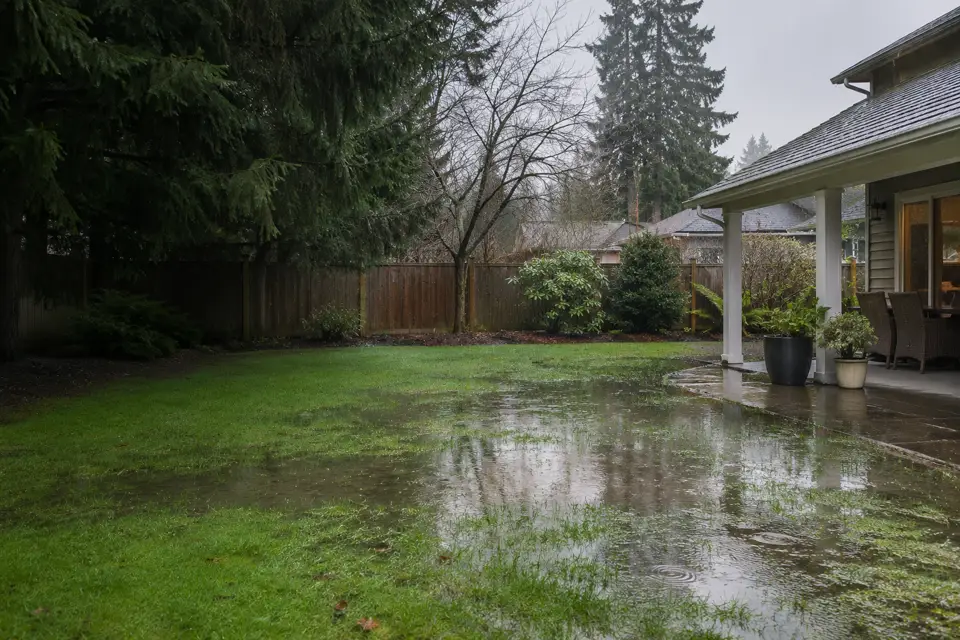
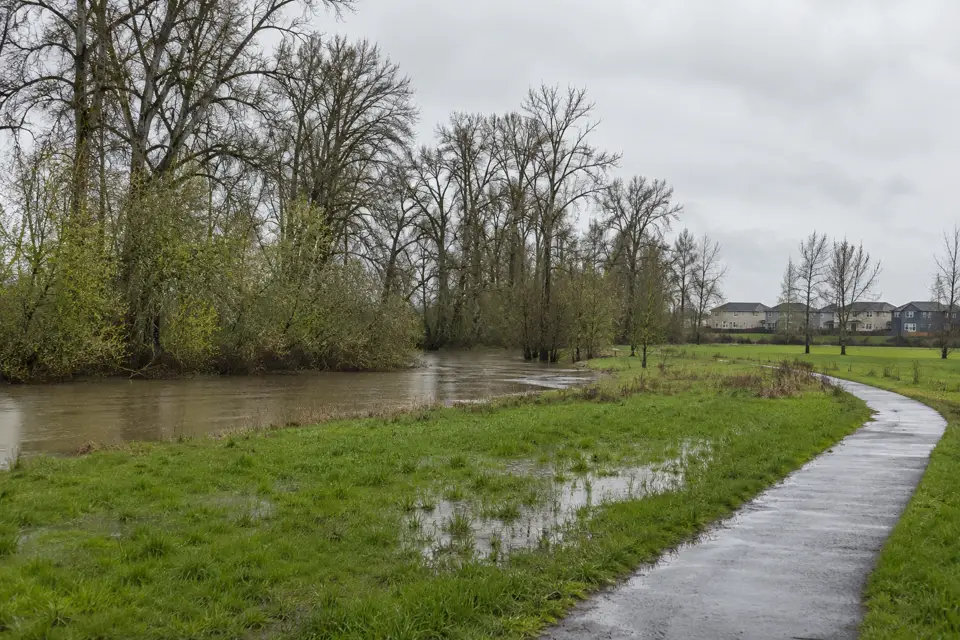
If puddles sit on the lawn for days, or the grass squelches all winter, the cause usually shows itself in a hard rain: watch where the water starts and where it stops.
A person answers and connects you with an independent, CCB-licensed drainage contractor serving Milwaukie, Happy Valley, West Linn, Tualatin, Lake Oswego, Oregon City and Wilsonville.
Illustrative photo
Common causes
- Low spots. Soil that settled over an old trench, a filled-in garden bed, or a lawn that was never graded evenly.
- Ground that slopes toward the house. Portland's stormwater guide tells homeowners to add or remove soil so the ground slopes and water flows away from structures (City of Portland).
- Compacted or clay-heavy soil that takes water in slowly. Construction traffic is hard on a future lawn.
- Roof water from downspouts emptying straight onto the grass.
- Water from next door or uphill. Public utilities generally stay out of it: Clean Water Services, for example, says it does not maintain private drainage systems or step into lot-to-lot drainage disputes (Clean Water Services). The practical fix is usually on your own lot.
Fixes, from simplest to most involved
- Move the roof water. Redirect downspouts that empty onto the problem area. See downspout drainage.
- Regrade. Reshape the soil so it falls away from the house and toward somewhere the water can go.
- Add a swale. A shallow, wide, grassed channel that carries surface water across the yard to an outlet. It looks like a gentle dip in the lawn.
- Add a yard drain. A grate at the low spot tied into solid pipe that carries water away.
- Put in a French drain. For water that is in the soil rather than on top of it. See French drain installation.
- Plant a rain garden. A planted low area that takes roof water where the soil drains well enough. In tight clay it may not empty fast enough to help.
Watch before you call
Next time it rains hard, walk the yard with your phone. Note where water collects first, where it seems to come from, and how long it stays after the rain stops. That is the most useful information anyone looking at your yard can have.


What it typically costs
Typical ranges from published sources, not a quote. Your price depends on length, depth, access, soil and where the water has to go. Sources were checked on November 20, 2026.
Yard drainage and regrading
- Regrading, per square foot
- $0.08 to $2Lawn Love also gives $15,800 to $44,535 per acre. Source: Lawn Love, Lawn drainage solutions, updated Nov 20, 2026.
- Dry creek bed, per square foot
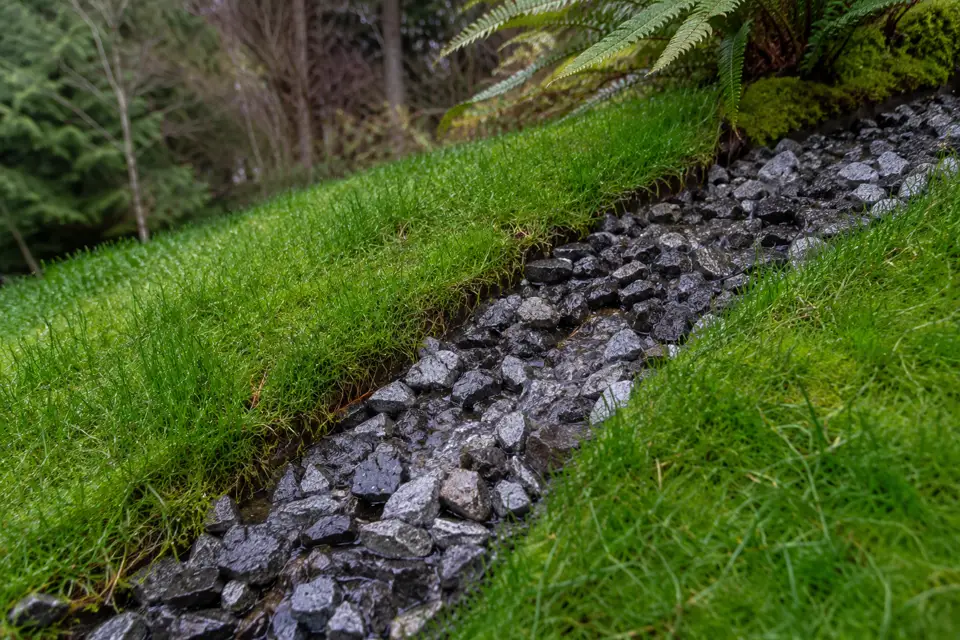
- $3 to $7A rock-lined channel that carries surface water across the yard. Source: Lawn Love, Lawn drainage solutions, updated Nov 20, 2026.
Questions people ask
Why does my yard only flood in winter?
Ground here stays wet for long stretches. Clackamas County averages about 48 inches of precipitation a year, and soil that is already full of water cannot take in more, so each storm runs off or pools. A yard that seems fine in October can be soggy by January.
Can I just add topsoil to the low spot?
For a shallow dip, sometimes. Spreading soil over a bigger area can push water somewhere new, including toward the house or a neighbor. Check which way the ground falls before you fill.
Is a swale or a French drain better?
A swale handles water running across the surface. A French drain handles water sitting in the soil. Plenty of yards end up with a bit of both.
Will fixing my yard push water onto my neighbor?
It should not. A good drainage plan sends water to a proper outlet, not over the property line. Portland's downspout rules, for example, keep the end of an extension at least 5 feet from a neighbor's property line.
Where
Yard drainage in seven towns south of Portland
Each town has its own ground and its own rules. Pick yours for local details.
Happy Valley
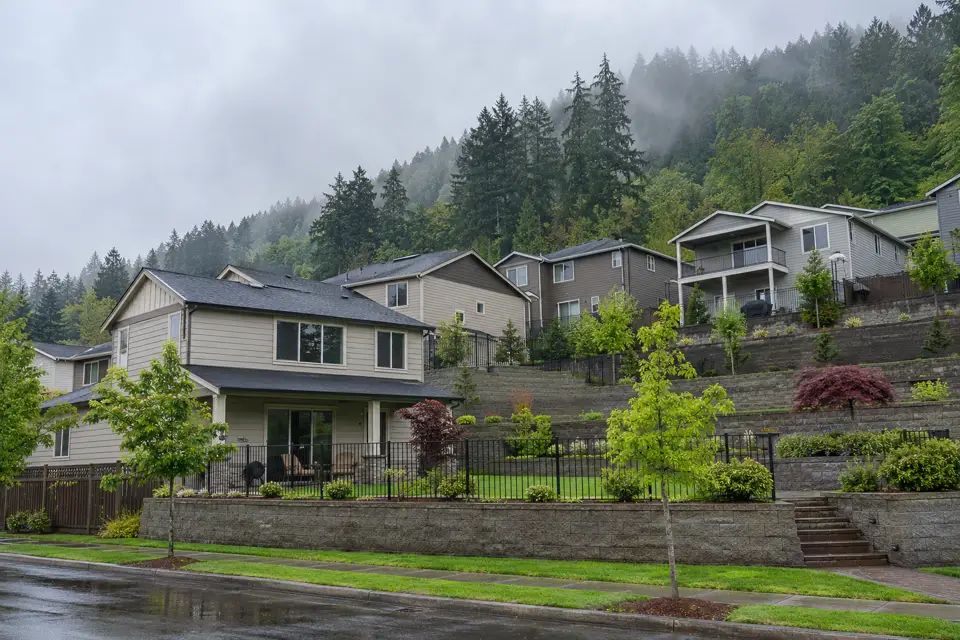
Hillside lots on Mount Scott, Mount Talbert and above Rock Creek.
Drainage in Happy Valley →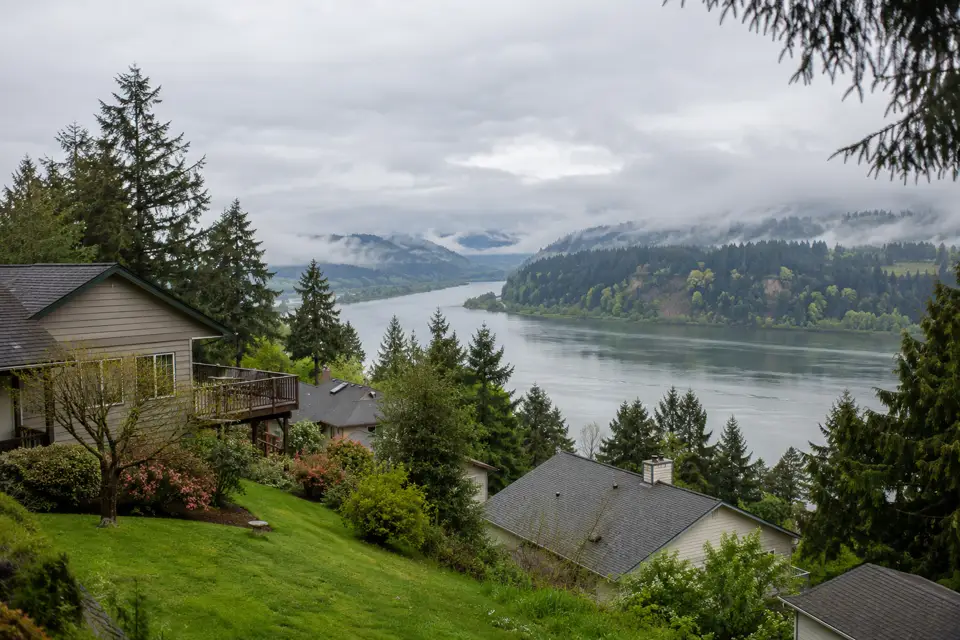
Oregon City
A bluff above the Willamette, with ravines down to Newell Creek.
Drainage in Oregon City →